










Quick answer: yes, but mainly for surface marking. UV lasers are often described as "cold-processing" lasers because they minimize heat transfer and reduce the heat-affected zone compared with many infrared laser processes. That precision makes them excellent at fine surface marking on many metals, but their lower average power and material-removal efficiency make deep engraving, cutting, or high-volume metal processing impractical. For that side of the job, most shops turn to a fiber or MOPA laser instead.
UV lasers earned their reputation on delicate materials — glass, plastics, leather — precisely because they work through low-heat, high-precision surface interaction rather than raw thermal power. That's the same trait that caps what they can do on metal.
How Does UV Laser Metal Engraving Work?
UV lasers use a shorter 355nm wavelength and high photon energy to interact very precisely with a material's surface, often with a smaller heat-affected zone than infrared laser systems produce. On metal, this lets them remove thin surface layers and produce fine, detailed marks. It's not that a UV laser can't affect metal at all — it's that its power and material-removal rate fall well short of what a high-power fiber or MOPA source can do on depth or speed.
Fiber lasers — including MOPA fiber systems, which offer more tunable pulse control (see our guide on MOPA vs fiber laser for the full breakdown) — are generally designed for much higher-rate metal processing, relying on thermal ablation: enough energy density to actually melt or vaporize material, which is what deep engraving and cutting require.
What Metals Can a UV Laser Mark?
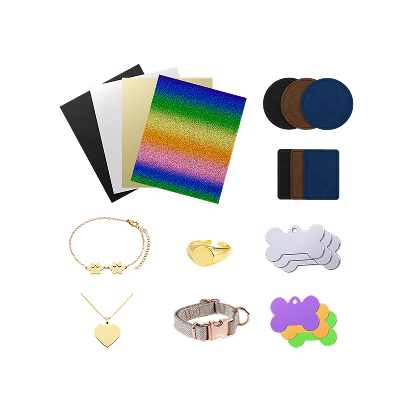
UV lasers can mark a fairly wide range of metals, including:
- Stainless steel
- Titanium
- Aluminum (including anodized aluminum)
- Brass
- Coated or painted metal surfaces
Results vary a lot depending on laser power, pulse characteristics, the metal's surface finish and reflectivity, any coatings present, and your marking speed and focus settings. A polished, reflective raw metal surface behaves very differently under a UV beam than a matte anodized or coated one — so "can a UV laser mark X metal" often comes down to the specific finish, not just the metal itself.
What Can a UV Laser Actually Do on Metal?
Works well for:
- Coated metals and painted surfaces
- Thin anodized aluminum marking
- Titanium and stainless steel surface marking — fine text, logos, serial numbers, high-detail graphics
Struggles with:
- Deep relief or engraving with real depth
- Fast, high-volume raw metal cutting
- Vibrant, repeatable color marking that needs precise oxide-layer control
UV Laser vs. Fiber / MOPA Laser for Metal Processing
| Capability | UV Laser | MOPA / Fiber Laser |
|---|---|---|
| Fine metal surface marking | Excellent | Excellent |
| Coated metal marking | Excellent | Excellent |
| Deep metal engraving | Limited | Excellent |
| High-volume metal processing | Limited | Excellent |
| Metal cutting | Very limited | Yes, depending on power and material |
| Stainless steel color marking | Limited | Excellent, with MOPA's pulse control |
| Glass and crystal engraving | Excellent | Limited |
| Subsurface crystal engraving | Excellent | No |
| Best for | Precision work on heat-sensitive materials | Metal processing and material removal |
If your work is mostly glass, crystal, and heat-sensitive materials with the occasional light metal mark, UV alone covers you. The moment "deep" or "colorful" enters the metal conversation, a fiber or MOPA source becomes the more practical tool.
Can a UV Laser Deep Engrave or Cut Metal?
Generally, no — not efficiently. A UV laser can mark a metal surface, but cutting or deep engraving requires the higher energy density and material-removal rate that fiber and MOPA sources are designed to deliver. This isn't a matter of turning up the power on a UV unit; it's a difference in what the technology is built to do.
UV Laser 3D Engraving vs. 3D Metal Relief
"3D engraving" means different things depending on the material, and it's worth separating the two clearly:
UV 3D = placing points inside crystal. For subsurface work in transparent materials, UV laser 3D engraving is really about glass and crystal — specifically, subsurface engraving inside solid blocks like K9 optical crystal, where the laser focuses at precise depths to place a design that appears suspended inside the material without touching its polished outer surface. This is where UV genuinely excels; it's the exact job this technology was made for, not a workaround.
MOPA 3D = removing layers from metal. Deep 3D embossing or multi-layer relief work on metal is a different mechanism entirely — it needs the real thermal energy a high-power MOPA fiber source delivers. Pushing a UV laser into this territory doesn't produce a lesser version of the same result; the underlying mechanism isn't built for material removal at that scale.
So if you're shopping for a "3D UV laser engraving machine" expecting it to do both crystal subsurface work and deep metal relief, that's actually two different jobs — worth knowing before you buy, since a single UV source won't cover both.
Why Combine UV and MOPA?
This is where most buyers get stuck. A standalone UV machine gives you excellent glass, crystal, and light-material capability, but caps out on metal depth. A standalone fiber laser handles metal well but can't touch delicate glass or heat-sensitive plastics without damaging them. Covering both traditionally meant buying two separate machines — two footprints, potentially separate workflows, more bench space, and more equipment to manage. A UV MOPA laser — one machine combining both sources — is the more recent answer to that trade-off.
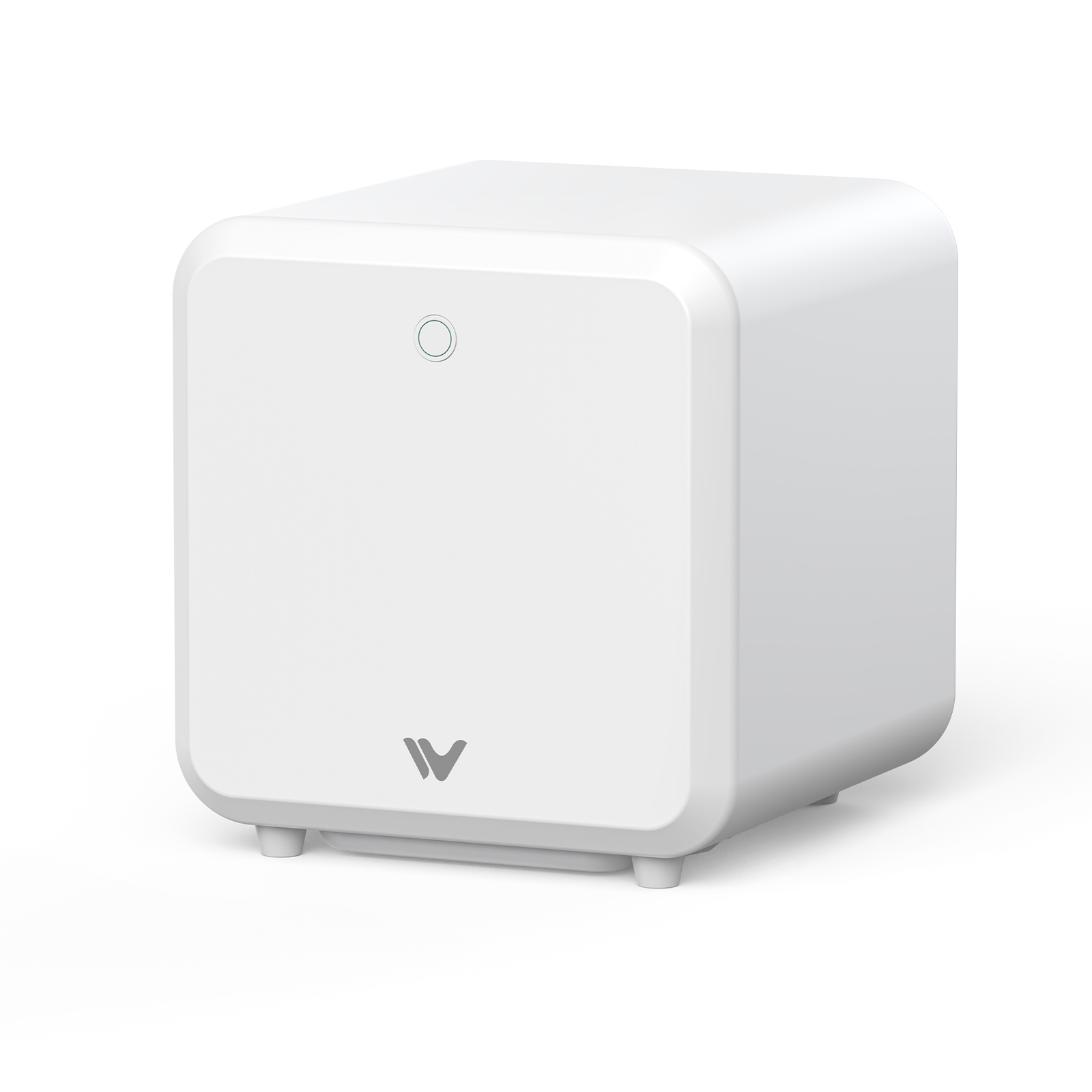
The WeCreat Lumos Ultra is built around that specific trade-off: a 6W UV laser paired with an optional 60W or 100W MOPA fiber module in one machine. This directly addresses the UV-vs-metal gap that pushes a lot of buyers toward owning two separate machines. The advantage isn't that every project needs both lasers — it's that the right source is available when your material changes.

What each side of the machine handles:
The 6W UV side covers micro-detail work, galvo speeds up to 16,000 mm/s, and true 3D subsurface crystal engraving — the glass and crystal work UV lasers are genuinely built for.
The MOPA module (60W or 100W) takes over for the metal side: deep engraving and relief work, and metal cutting — WeCreat's published specs list up to roughly 3mm on stainless steel at 100W, 2mm at 60W, and around 0.6mm on UV alone, under suitable material and processing conditions — plus controlled color marking on stainless steel and color effects on titanium, depending on material and processing parameters.
Instead of running a UV laser for glass work and a separate fiber laser for metal, the Lumos Ultra switches between sources on the same platform. For a small shop watching both budget and workshop square footage, that's a meaningfully different proposition than buying two standalone machines.
Conclusion
UV lasers can engrave metal — just not in every way people sometimes expect. Fine surface marking on many metals: yes. Deep engraving, cutting, and vibrant color work: that's a job for fiber or MOPA technology. If your work is mainly glass, crystal, plastics, and other heat-sensitive materials, a UV laser alone may be all you need. If metal engraving, cutting, or color marking is also part of your business, combining UV with a MOPA fiber source gives you much broader material capability without maintaining two completely separate laser systems.
Explore the WeCreat Lumos Ultra to see how a UV + MOPA configuration can cover both precision glass work and high-power metal processing.
Explore the WeCreat Lumos Ultra >>
Frequently Asked Questions
Q1. Can a UV laser engrave stainless steel?
Yes. A UV laser can mark or lightly engrave stainless steel, especially for fine text, logos, serial numbers, and detailed graphics. It's generally slower and less efficient than a fiber laser for deep engraving, though. For controlled color marking on stainless steel specifically, a MOPA fiber laser is usually the better choice because of its adjustable pulse parameters.
Q2. Can a 6W UV laser cut metal?
A 6W UV laser isn't generally designed for efficient metal cutting. Under suitable material and processing conditions, some very thin metal materials may be cut, but this is far slower and more limited than fiber or MOPA processing. For practical, repeatable metal cutting, a higher-power fiber or MOPA laser is the better choice — on a dual-source machine like the Lumos Ultra, that's what the MOPA module is for.
Q3. Can a UV laser engrave aluminum?
Yes, particularly anodized aluminum, where UV produces clean, high-contrast marks. Bare, untreated aluminum is more reflective and generally marks less consistently than anodized or coated aluminum.
Q4. What materials are best suited for a UV laser?
Plastics, glass, leather, fruit, acrylic, and other heat-sensitive materials are where UV lasers perform best, since low-heat, high-precision marking avoids the scorching or cracking that heat-based lasers can cause. UV can also do light surface marking on metal, just not deep engraving or cutting.
Q5. Can a UV laser engrave coated metal?
Yes. UV lasers are particularly effective for marking coated, painted, and anodized metal surfaces, since they can remove or modify thin surface layers with high precision and a relatively small heat-affected zone.
Q6. UV laser vs. fiber laser: which is better for metal?
Fiber (or MOPA) lasers are generally the better choice for metal specifically — they handle deep engraving, cutting, and color marking that UV can't efficiently do. UV lasers pull ahead when the job also involves glass, crystal, or heat-sensitive materials that a fiber laser would damage.