










Makers and small business owners expanding into metal, jewelry, and plastic engraving run into the same wall sooner or later. They know they need a fiber laser — but then hit a decision point between a standard Q-switched fiber laser and a MOPA fiber laser, with technical jargon on both sides making the choice harder than it should be.
Technically speaking, MOPA is not a separate laser category — it's an advanced type of fiber laser. The real comparison is between a traditional Q-switched fiber laser and a MOPA fiber laser, which is what the rest of this guide focuses on.
If you're searching for "MOPA laser vs fiber laser," you're probably trying to answer one practical question: is the extra cost of MOPA actually worth it for what you make?
This guide explains the difference between MOPA laser and fiber laser technology in plain English, helping you choose the right tool without damaging materials, struggling with inconsistent results, or paying for capabilities you don't actually need.
The Core Concept: Standard Fiber Laser vs. MOPA Laser
Most standard fiber lasers used for marking are Q-switched systems with a fixed pulse duration. They deliver strong, reliable peak power, which makes them a solid choice for traditional deep metal engraving — but that heat input stays constant no matter what material is underneath it.
A MOPA fiber laser (Master Oscillator Power Amplifier) allows independent adjustment of both pulse width and frequency. This additional control gives operators a wider processing window, making it easier to handle applications that are difficult for fixed-pulse fiber lasers.
Think of a standard fiber laser as a single-speed power tool — reliable, powerful, and optimized for a specific type of work.
A MOPA fiber laser is more like a variable-speed precision tool. It allows operators to adjust energy delivery based on the material and the desired result.
However, MOPA does not automatically mean deeper engraving. Raw engraving depth depends heavily on power level and single-pulse energy, and standard fiber lasers are well established for straightforward deep engraving on rigid metals. MOPA's advantage lies elsewhere — mainly in color marking, fine detail, and heat-sensitive materials, not in exceeding what a standard fiber laser can already do on depth alone.
Key Differences: MOPA vs. Fiber Laser Breakdown
Pulse width control & thermal management.
A standard fiber laser's fixed pulse width can scorch, melt, or warp thin metals and delicate plastics. MOPA's short-pulse settings deliver high precision with a minimal heat-affected zone — the difference between a clean mark and a scorched one on thin metals, coated materials, and certain plastics.
Color engraving on stainless steel & titanium.
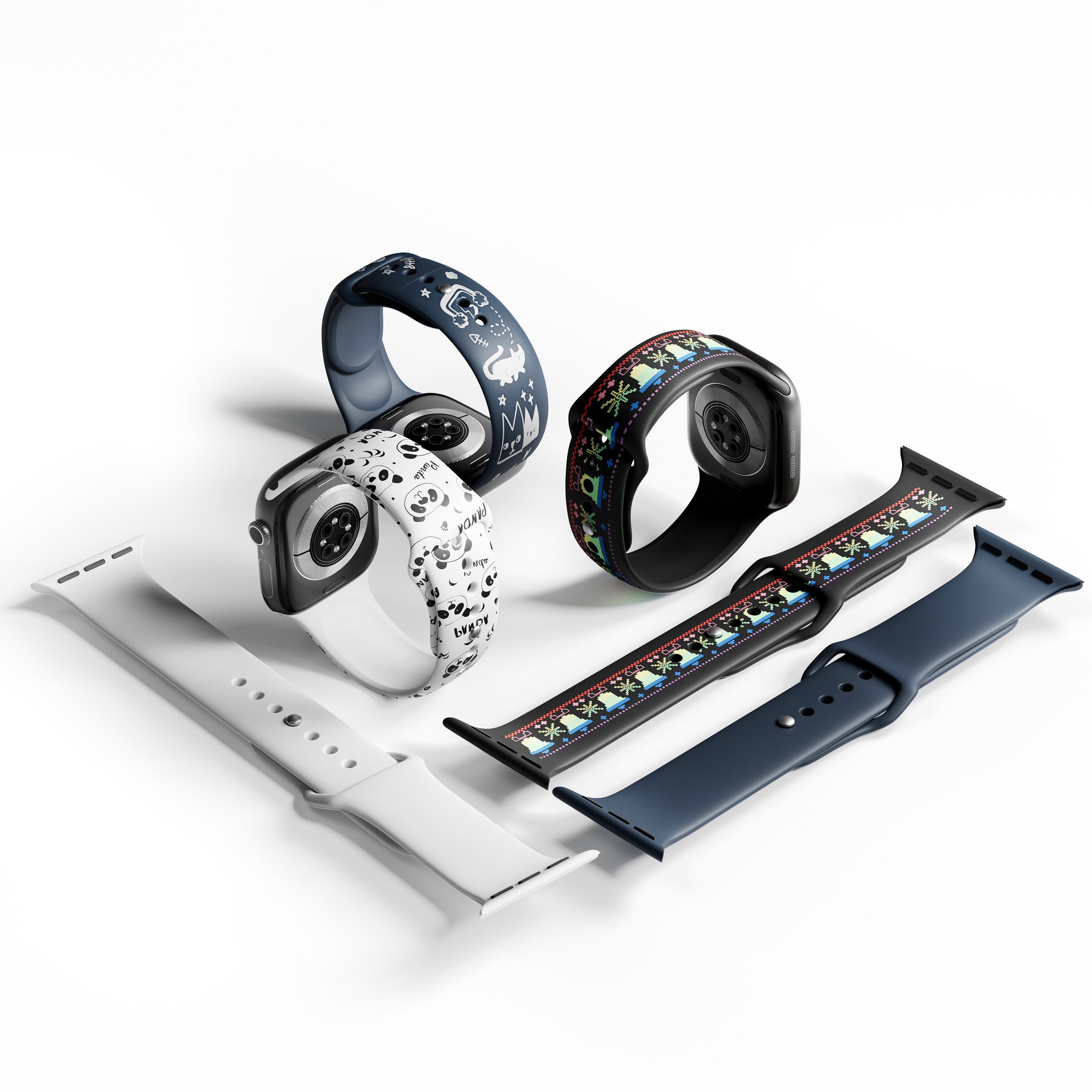
Standard fiber lasers have an extremely narrow window for producing color, and results are often dull, inconsistent, or hard to reproduce reliably. MOPA's precise oxide-layer control makes it one of the strongest choices for stainless steel and titanium color engraving applications — producing vibrant, repeatable results, both iridescent, light-refracting effects and solid, saturated tones. Worth knowing before you buy: even with MOPA, consistent, repeatable color still takes some initial calibration testing on each specific metal type, since power, frequency, pulse width, and speed all interact to produce a given color.
High-contrast black marking on anodized aluminum.
Standard fiber lasers often strip or lighten the surface layer rather than producing a rich, dark mark. MOPA achieves deep, high-contrast black marks while leaving the surrounding oxide layer largely intact.
Material versatility beyond metals. Standard fiber lasers are mostly restricted to hard metals and select opaque plastics. MOPA extends cleanly into soft metals, sensitive polymers like ABS and polycarbonate, and coated materials without the scorching a fixed-pulse laser tends to cause.
MOPA vs Fiber Laser: Head-to-Head Comparison
|
Feature |
Standard Fiber Laser (Q-Switched) |
MOPA Fiber Laser |
|
Pulse width adjustment |
Fixed |
Adjustable |
|
Color engraving |
Limited |
More controllable |
|
Plastic & delicate materials |
Higher heat risk |
Better thermal control |
|
Glass & crystal engraving |
Not supported |
Not supported |
|
Deep metal engraving |
Well-suited, established use case |
Not the primary advantage |
|
Best suited for |
Industrial marking |
Creative customization & advanced marking |
(Figures based on published manufacturer specifications and general industry characteristics as of 2026; individual machine specs vary by model.)
Purchasing Guide: Which Laser Is Right for Your Business?
Choose a standard fiber laser if: your work is entirely industrial serial numbers, barcode marking, or deep engraving on rigid metals such as steel or brass, where heat sensitivity and color effects are not major concerns. A Q-switched fiber laser is generally the more cost-effective choice for straightforward metal engraving and repetitive marking work.
Choose a MOPA laser if: you're running a custom gift shop, jewelry business, or artisan brand that needs vibrant color metal engraving, deep black marks on anodized aluminum, or clean marking on plastics that a fixed-pulse laser would scorch.
MOPA vs Fiber Laser: Which One Should Beginners Buy?
For beginners, a standard fiber laser is enough if you only need logos, serial numbers, and basic metal engraving — it's simpler, generally more affordable, and there are fewer parameters to learn before you're producing clean results.
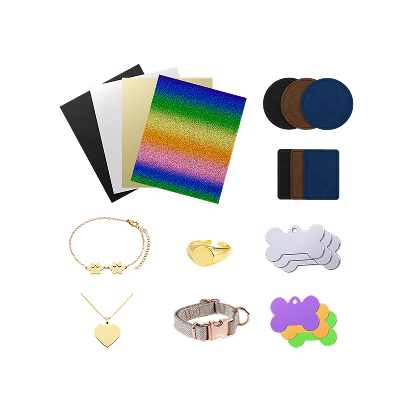
Choose MOPA if you already know you're expanding into jewelry, personalized products, color engraving, or a mix of metal and heat-sensitive materials. For jewelry applications, MOPA's fine detail capability and improved heat control are especially valuable. The extra parameters take more time to learn, but they're what unlock the applications a fixed-pulse laser genuinely can't do well.
If you're unsure whether you'll need color marking or advanced materials down the line, the higher upfront cost of MOPA may still be worth it as a long-term investment — upgrading later usually costs more than buying the right capability the first time.
When MOPA Still Isn't Enough
Even a capable MOPA laser has a real limitation worth knowing about: it can't engrave transparent glass, clear acrylic, or certain delicate organic materials — those require a fundamentally different laser type (UV) working through cold, photochemical processing rather than heat. Historically, covering both categories meant buying and maintaining two separate laser engravers.
This is where hybrid systems combining UV and MOPA become interesting.
Why Choose Between UV and MOPA When You Can Have Both?
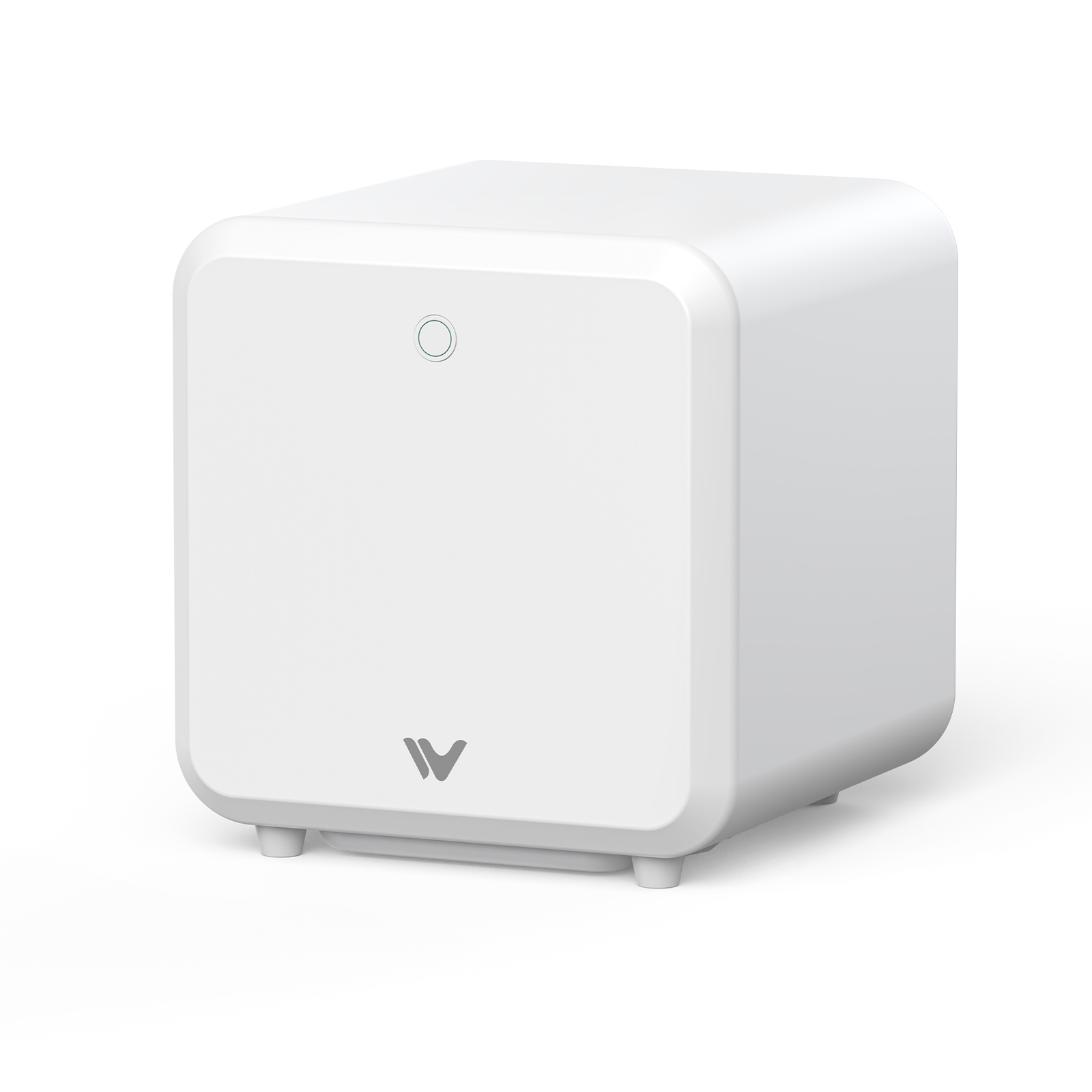
Instead of choosing between a MOPA fiber laser for metals and a UV laser for delicate materials, users can switch between both workflows in one system. WeCreat's Lumos Ultra addresses that gap directly, combining a 6W UV laser for cold processing on glass, crystal, and leather with a 60W or 100W JPT MOPA module for metal color engraving and marking. Switching between the UV and MOPA laser sources is a one-click software selection — though depending on the specific application (such as crystal inner engraving versus flat MOPA metal work), the machine's field lens still needs to be manually swapped, with the system automatically detecting which lens is installed rather than requiring manual calibration. The system works with WeCreat MakeIt as well as LightBurn, so you're not locked into a single software workflow.

A few specifics worth knowing: the system supports 10+ laser processes across 2,500+ materials, a galvo speed rated up to 16,000mm/s by the manufacturer, and a 50MP camera with automatic field-lens detection and a 3-step guided color engraving workflow, helping new users achieve consistent results faster than starting entirely from manual parameter adjustments.
Final Thoughts
The decision isn't standard fiber versus MOPA in the abstract — it's whether your actual product line needs the color engraving, delicate-material handling, and broader material range that MOPA's adjustable pulse control makes possible.
If your business is built around personalized products, jewelry, or creative customization, MOPA gives you more room to grow into those categories. If your workload is mainly industrial identification marking on rigid metal, a standard fiber laser remains the smarter, more affordable investment for the job.
Frequently Asked Questions
Q1. What is the main difference between MOPA laser and fiber laser machines?
The primary distinction is pulse width control. Standard fiber lasers fire at a fixed pulse duration, while MOPA lasers allow pulse width and frequency to be adjusted independently — which is what enables better thermal control, metal color engraving, and cleaner marking on heat-sensitive plastics.
Q2. Is MOPA worth the extra cost?
It depends on what you make. MOPA is worth considering if your business involves personalized products, jewelry, color engraving, or mixed materials. For simple industrial marking, the added capability may not justify the higher price.
Q3. Can MOPA engrave gold and silver?
Yes. MOPA fiber lasers can mark precious metals such as gold and silver, although results depend heavily on the alloy, surface finish, and engraving parameters — settings must be adjusted carefully to avoid excessive heat and surface damage.
Q4. Can a MOPA laser cut thin metal?
Some high-power MOPA systems can cut thin metal sheets — roughly up to 2mm on a 60W module or 3mm on a 100W module, in machines like the WeCreat Lumos Ultra
Q5. Is MOPA better than standard fiber for beginners?
MOPA offers considerably more flexibility as a business grows, though it does come with more parameters to manage than a fixed-pulse laser. Systems like the Lumos Ultra aim to reduce that complexity with guided presets and simplified software workflows, though some hands-on calibration is still part of getting consistent results, especially for color work.